Thursday, June 14, 2012
Driving to Conserve Fuel
Tuesday, January 17, 2012
Driving in the Snow
Winter is upon us, so it’s time to take a look at driving in that white stuff - snow.
Before you drive off after a snowfall, take a few minutes to make sure you can see, and that you can be seen by others. Not only is this common sense, it's the law. You can be fined for driving with the windows covered in snow or ice.
Clear all the snow off the hood, windows, trunk and all lights. You don't want snow flying off the hood and back onto the windshield, blinding you. Of course, de-fog the windows before driving, and always drive with your headlights on.
Obviously, the lack of traction is the biggest challenge in snowy driving conditions. If you drive a rear-wheel-drive vehicle, you may be able to help its forward traction a little by adding weight to the trunk. However, if you do get into a rear-wheel skid, the extra weight increases the centrifugal forces once the car begins to slide - just like a pendulum - possibly making matters worse. So, if you put extra weight in the trunk, place it as far forward as possible - preferably right over the rear axle.
And please don't add weight to the rear of a front-wheel-drive car. It not only won't help, it's dangerous.
Getting stuck in deep snow may be one of the most frustrating situations you ever face in the winter. Generally, it's not dangerous, just annoying.
The first objective is to avoid getting stuck in the first place by trying to keep up your momentum. Once you stop in deep snow, your chances of getting going again are reduced. Try to keep the car moving at all times, even if it means just crawling along at a couple of kilometres per hour. In fact, don't carry too much momentum, because your stopping power is much reduced as well.
If you do get stuck, don't just sit there spinning your wheels. All that does is create an icy patch under the tires, which will make it even tougher to get out. Instead, turn off the radio, the heater fan and windshield wipers, open your window and really listen for any spinning of the tires.
Before you even try to get going, though, get out of the car and clear as much snow as possible away from right in front of the tires. If possible, put some sand, kitty litter or even some old carpet (keep this "winter traction kit" in the trunk along with a small shovel, candles, matches, a drinking cup and non-perishable food) down in front of the tires to give them some traction. Give them a chance to get moving - to get some momentum - before having to plow through the deep snow again.
If you still can't get moving, your next objective is to rock the car backwards and forwards until it has enough momentum to get out of the snow rut. In an automatic, quickly but smoothly shift from Drive to Reverse and back again, trying to stay in sequence with the rocking of the car.
In a standard transmission vehicle, gradually start forward then immediately release the clutch, allowing the car to roll back. Then ease the clutch out to move forward again to the front of the rut, then release the clutch and roll back. Do this until the car has the momentum to drive out of the rut.
Use the highest gear possible in an automatic - Drive or Overdrive. In a standard transmission vehicle, try starting in second gear. You may even want to shift up to third and fourth gear earlier than you normally would. Using a higher gear will cause less wheelspin.
Now that you've got your vehicle moving, keep it under control until we look at controlling a car in snowy conditions in a future column.
Now that we've got it going, let's look at keeping it under control in the snow.
First, take it easy when crossing snow-covered intersections. The snow usually becomes packed, polished and very slippery from drivers skidding and sliding at the stop sign or traffic light.
Be very careful when driving in ruts in the snow, as they can pull your car from side to side, or into on-coming traffic. Always look where you want to go, not where you don't want to go. This will automatically make you steer in the direction you want to go, helping control the car's tendency to follow the ruts - which may not be where you want to go.
Also, be careful if your car pops out of the rut, especially if your front wheels are turned. Jumping, or popping, out of a rut with the wheels steered sharply to the left or right usually tends to make the car skid sideways. Again, look and steer where you want to go, turning the steering as little as possible.
If you have to change lanes on a snowy road, be very smooth with your steering and don't accelerate or decelerate. As long as you keep steady - turning the steering wheel as little as possible - driving gently with your speed not too high, you shouldn't have much to worry about when crossing the deep snow and ruts between the lanes.
Often, the tracks, or ruts, made by other vehicles are packed hard and are much icier than the snow next to it. Try to avoid having to brake in these ruts. You will be able to stop much quicker in deep snow, as it will build up in front of the tires, helping stop your car.
Try to do only one thing at a time. Do your braking before a corner in a straight line, then take your foot completely off the brake pedal before you steer around the corner, and don't begin accelerating until you are pointing straight ahead again.
So, whether you're sliding towards a ditch, another car, a telephone pole or whatever, don't look at it. Don't focus on where you could crash. Instead, look and steer where you want to go. That's your best chance of controlling a skidding vehicle.
Monday, January 9, 2012
Teens Invited To Help Fight Distracted Driving As "DRIVE2LIFE" PSA Contest Launches
Winner gets $1,000 and trip to NY City to work with award-winning director to turn concept into professional PSA for national broadcast.
"Traffic crashes are the leading cause of death among U.S. teens, with 5,000 killed annually," said Michelle Anderson of The National Road Safety Foundation, a non-profit group that produces driver safety materials that it distributes free to schools, police and traffic safety advocates. "Distraction is a major factor in many teen crashes, so we are encouraging young people to help us get the word out to their peers via television and the internet."
“The Drive2Life PSA Contest is a great way for students to get creative and let their voices be heard in the dialogue about the dangers of distracted driving,” said Francie Alexander, Chief Academic Officer at Scholastic. “We know from our years of working with teachers and listening to kids that they thrive when given projects connected to solving real world problems.”
Students in Grades 6 - 12 are invited to submit a PSA concept that addresses, in 30 seconds to as long as two minutes, the dangers of distracted driving. Ideas may be in the form of scripts, storyboards or treatments. No video will be accepted, and group entries are not accepted.
The creator of the winning PSA concept, judged by a panel of education and traffic safety experts and an award winning film director, will receive a $1,000 prize and an expenses-paid trip to New York City to work with the director to film and edit the idea into a professional PSA. Two runners-up in each grade category (Grades 6-8, 9-12) will each receive $500.
The winning PSA will be broadcast in May on more than 220 TV stations nationwide on the nationally-syndicated Teen Kids News. It will receive widespread airings on newscasts and online. The winner will also be profiled in Scholastic classroom magazines, which are used in classrooms by more than three million students and nearly 40,000 teachers.
"Distracted driving is a dangerous epidemic on our roadways, and teens are among the most at risk," said U.S. Secretary of Transportation Ray LaHood." It's critically important for young drivers to get the message that even one text or call could have devastating consequences. This PSA contest is a creative opportunity for young people to promote safe driving in their communities and encourage their peers to put down their cell phones when they're behind the wheel."
A 16-year old Arizona high school student, Bethany Brown, won the first Drive2Life PSA Contest, with a 30-second spot titled, "There are no re-do's in real life." The winner in 2011 was 15-year old Lauren Daniels of Oswego, N.Y., whose spot used humor to get across the message, "Distracted Driving. Not funny."
"We were impressed with the excellent ideas we saw the past two years," said Sec. LaHood. "We look forward to seeing more great ideas from creative young people that will help make the risks of distracted driving resonate with their peers."
Visit
For nearly 50 years, the
Media Contact: David Reich (212) 573-6000
Tuesday, October 11, 2011
Surviving Nighttime Driving
As you read this, the darker, drizzlier, fall weather is upon us. We take other precautions with respect to the changing seasons, so let’s extend that thought, and review some of the skills and precautions necessary to drive safely in darkness.
The combination of darkness and wet rainy weather can combine to cause us to simply see things that just aren’t there. A friend of mine, who lives on the east coast recently told me of a situation when he discovered - in just enough time to avoid a collision - that after many hours on the road, he thought a slender silver birch tree was an extension of the white lane divider line, and only discovered just in the nick of time that the road actually curved to the right. He said, “I just about followed what appeared to be the center line, right into the woods!”
There are times when we anticipate and sometimes are fearful that we will encounter a known hazard. I once lived in an area labeled as a “range area”; livestock often would escape their fenced pastures and cross the road. The problem was not limited to domestic stock, but the local deer seemed to enjoy the company of the cattle, and I expect their abundant food source, as well. A dark colored animal; a cow, horse or even pigs, can be nearly impossible to see under certain conditions, unless they turn their heads and you can make out the “glow” of their eyes (the light reflected by your headlights) The northern states, several provinces of Canada and Alaska have specific traffic rules for avoiding encounters with moose. The physics of a speeding automobile colliding with a one-ton moose are impressive. I always worried a bit about having a close encounter with one of these animals. Once I was fooled into making a rapid stop, only to find that the “deer” I thought I saw in the road way was just a trick of the shadows and reflections on the wet road surface. I guess you could say I thought about it so much, my mind conjured up the very image I was hoping to avoid. No one was with me at the time, so I thankfully didn’t have to explain my near panic stop.
Fatigue can often increase the occurrence of “road phantoms”. We often feel pressured to make “just a few more miles” but that only makes the problem worse, as the farther we drive, the more fatigued we become and not only do our eyes play tricks on us, but our perception time and reaction time is also reduced, making taking evasive action, when really needed, even more delayed.
Here are some tips to help you drive more safely at night:
Use your low beams on sharp curves – Negotiating a sharp curve and the posted speed limit, at night can lead to being surprised by an on coming car, maybe crowding the center line. The gleam of your high beams will washout the glow of the oncoming car’s lights, you simply won’t know they are there until you are nearly on them.
To warn on coming drivers on a sharp curve, flick your lights from low to high and quickly back to low again – A retired highway patrol office, suggested this technique, “It changes the intensity of the light at the apex of the curve, and helps other drivers know you’re coming.” Do this of course only if there are no cars visible, coming toward you. The Washington State Driver’s Guide specifies that you must dim your lights at a minimum of 500 ft from any approaching vehicle.
Increase your following distance at night – There are two good reasons to do so: The Washington Driver’s guide suggests 4 seconds following distance under conditions of good visibility – meaning daylight hours. They suggest adding at least another second’s distance after dark or when ever conditions of visibility are impaired by rain, fog, blowing dust or anything that reduces your sight distance. The Washington Driver’s Guide also states that you must dim your lights when following another driver at a minimum of 300 ft behind them. This practice prevents blinding the other driver by temporarily reducing their night vision due to your bright lights.
Don’t out drive your headlights – The headlights on our modern cars are much brighter than the lights on older cars; this is both good and bad. While the brighter lights do help us see farther down the road, it can lead to a false sense of security. The driving dynamics of the situation, the speed, weight of the vehicle, the level of attention or distraction of the driver at that moment, taken together may mean we are unable to take corrective or avoidance actions soon enough to prevent a collision. Simply put, if you can’t identify a hazard, (perception time) initiate and actually complete the required emergency action, (reaction time) in the time it takes your car to travel the distance illuminated by your headlight, you’re driving too fast and “out driving your headlights”.
Highway engineers have done a good job of making our roads safer with the addition of the road edge stripe (aka “fog stripes”) on the right edge of the roadway, using reflectorized paints and reflectors to make the lane divider stripes, “rumble strips” often on the road edge and at times in addition to the centerline, as well as reflectorized and illuminated road way signs. All of these technical upgrades help but, the final responsibility for safe nighttime driving hasn’t changed: it is still in the hands of the one behind the wheel, just as it was for the generations of drivers that have preceded us.
Thursday, October 6, 2011
Driving Tip: Concentration and Distractions
There seems to be more and more distractions around us each day. Not only are there more traffic and street signs to deal with everyday, but technology is making it more difficult. Stereos, cell phones, email-capable phones, and more are becoming common ingredients in our daily driving.With our lives becoming busier and busier each day, we try to accomplish more things while driving. Things like shaving, applying make-up, drinking coffee, and eating are becoming common practice while driving.
Or, should they be?
I'm not saying we all have to drive without looking at, or doing, anything else all of the time. If you're driving in conditions that don't require 100% concentration - light traffic, good weather, open road - there is no reason why you can't do a little more than just drive.
In fact, I'm a great believer in the benefits of some of this new portable technology, particularly cell phones. Before using a cell, if I was late for a meeting I would rush to get there. Now, I just phone ahead and explain the problem. Plus, there are many times I've used it for emergency calls.
However, with any of these distractions, I think a little common sense is necessary.
On rainy days in rush-hour I've seen drivers talking on cell phones while drinking coffee. I've heard of drivers who send and receive faxes or read email while driving on the freeway at 60 MPH. I've seen people eating pizza and listening to their stereo at who knows how many decibels.
Who's driving the car? And I'm not talking about just the physical action of driving. I'm talking about the mental side of driving. Driving safely in any condition requires far more concentration than most of us care to admit.
Please, if you're going to do something other than drive, use common sense. Pull to the side of the road to make a call on the cell phone; use hands-free; wait until a traffic light to reach into the back seat to grab something; pull to the side of the road to read your email; eat in the parking lot of the fast-food outlet; keep your stereo at a reasonable volume so you can concentrate on traffic around you; and shave or apply make-up at home.
If you add up all the time you can save by doing these things while driving, and compare them to the time lost with one minor accident caused by it, you'll be convinced immediately. Concentrate on using common sense.
Tuesday, October 4, 2011
Getting Your Car Ready for Fall & Winter Driving
Windshield wipers
Windshield washers
Are the washer nozzles clear? If not, you can probably open them with a thin piece of wire. Is the washer reservoir both intact (not cracked, and cap not missing) and clean? The washer fluid tank can usually be removed and washed out, and of course refilled with clean washer fluid. For winter driving, always use an antifreeze washer fluid. This will not only keep the system functional, but may help remove the ice buildup on the windshield that may accumulate as you drive.
Defrosters
Many modern cars have defrosters that provide heat to clear the windshield nearly instantly – this is a great safety feature! But defrosters rely on ducting that carry the warm air to the windshield. At times the duct may drop loose from the connection that spreads the warm air to the windshield, or may have cracks due to age or other damage. Hold your hand on the defroster outlet; do you actually feel warm air? If not, it may take some mechanical help to troubleshoot the system. Don’t let yourself be a “peep-hole” driver, make sure your defroster is working properly.
Lights
Do they all work? Check both low and high beams. Check that all the other exterior lights are working too: turn signals, marker lights on the sides, license plate lights on the rear. Changing a bulb is not all that difficult on many cars, however make sure the bulb you use is the same part number as the one your are replacing. Just because it will fit the socket does not mean it is the right candlepower (is bright enough) for the application.
Turn signals
Do they flash at the correct speed, and at the same speed on both sides? If they flash on one side but the dash indicator stays steadily “on”, on the other side, it is usually a burned out bulb. Do your turn signals cancel after you straighten out the steering wheel? IF not a mechanic may be need to correct the problem. NO one likes to follow someone with their turn signals steadily “on”.
Rear window defroster
These were once an option, but now are generally standard equipment. They should clear the fog evenly across the window, a pattern of alternating foggy and clear stripes indicates one or more burned out heater wires. This often requires replacement of the window, but a chemical anti-fogging agent will make a good substitute. While you are applying the anti-fog chemical, a coat on the side windows is a great idea, too. Clear vision 360 degrees around you is best.
Tires
The unsung hero of driving safety, your tires need attention to both perform properly and give you the greatest longevity. Look in your car’s owner’s manual for the proper inflation. The maximum inflation on the sidewall of the tire is just that – a MAXIMUM inflation to carry a specified maximum load. If your tire is not so heavily loaded, maximum inflation may not be best. If your owner’s manual doesn’t specify inflation, check with the shop where you purchased your tires for their manufacturer’s recommendations for your specific car and the load you are carrying. Check to see if there is adequate tread depth, cuts, or other damage. 1/16th of an inch is the minimum legal allowable tread depth, but is wholly inadequate for slippery road conditions.
Steering
There should be no looseness, vibration or unusual noises as you steer, particularly on tight turns. Any of these symptoms may indicate worn parts or a need for service. Noise on a tight turn - on front wheel drive vehicles – may indicate a worn constant velocity universal joint.
Exhaust system
Rust out of your exhaust system components is not common today for two reasons: better materials are used for mufflers and exhaust pipes, and today’s engines and exhaust systems run at hotter operating temps. The higher temperatures cook out any accumulated moisture in the system, thus preventing premature rusting. However physical damage is still a problem. While driving with the car tightly closed due to colder conditions, any leaking of the exhaust could allow carbon monoxide to enter the passenger compartment. Generally today’s heater systems keep the “cabin” slightly pressurized to help prevent “CO” from getting in, but it’s best know there are no leaks.
Tuesday, August 30, 2011
Another School Year Begins
The end of August means that many school districts are commencing the new school year. As I type this I'm envisioning my granddaughter, standing by the side of the road, waiting for the school bus to start her first day in the first grade. Although there are nearly 3000 miles separating us, the vision is very clear, as I know she's excitedly talking with her friends, comparing new school clothes, backpacks and lunch boxes.
All of us who drive, are affected by the opening of school, whether we have school age children or not. We need to be especially alert when passing though school zones or driving on streets where kids are in-route to school. As fall approaches, it is getting darker in the morning as sunrise comes later and later with the advancing seasons.- there are three or more marked traffic lanes,
- the roadway is divided by a median,
- the roadway is separated by a physical barrier.
Friday, April 1, 2011
Safer Roadways Paved by the Recovery Act
These are just two of the investments outlined in a Washington State Department of Transportation report on the state's delivery of Recovery Act-funded projects. The report – State and local governments have completed 185 projects and spent more than $400 million of the $490 million in Recovery Act highway funds distributed to Washington. In addition, the state has received $781 million in federal high-speed rail funds and $179 million in transit funds as part of the Recovery Act. The analysis is part of WSDOT's ongoing effort to assess state and federal investments in transportation and comes at a transition point for Washington's Recovery Act project delivery. Most of the highway, transit, and ferries projects are now complete, while construction is about to begin on the agency's Recovery Act-funded high-speed rail program.
Friday, March 11, 2011
FMCSA is sending out Warning Letters now
FMCSA BEGINS ISSUING 23,000 CSA WARNING LETTERS
FMCSA has begun sending an initial batch of 23,000 Compliance, Safety, Accountability program warning letters to fleets as the agency begins concrete interventions in its new program. Over the next several months, a total of at least 50,000 warning letters will be sent, Boyd Stephenson, manager of safety and security for ATA, told Transport Topics.
Warning letters advise carriers that their performance merited “alert” status by falling below acceptable levels on at least one of CSA’s Behavior Analysis and Safety Improvement Categories, or BASICs. Those BASICs, such as unsafe or fatigued driving, form the statistical heart of CSA’s safety measurement system, which assigns a percentage ranking on each BASIC and establishes thresholds. Warning letters are sent when threshold levels are exceeded.
“A review of [insert carrier name] safety data shows a lack of compliance with motor carrier safety regulations and suggests that your safety performance has fallen to an unacceptable level,” John Van Steenburg, director of FMCSA’s Office of Enforcement and Compliance, writes in these alert letters. Agency spokeswoman Candice Tolliver said both trucking and bus companies will receive letters over the next two months, but she couldn’t say exactly how many went to truck fleets. About 8% of carriers will receive warning letters, based on FMCSA statistics that count 650,000 carriers.
Stephen Keppler, executive director of the Commercial Vehicle Safety Alliance, said the warning letters are an important step because they quadruple the number of carriers facing active FMCSA intervention. Under the former SafeStat system, the agency took action against just 2% of carriers. Keppler said it was difficult to judge industry safety levels based on the number of warning letters because there is no earlier point of comparison to show whether progress was being made.
Warning letters can be followed by off-site or on-site investigations if carriers’ performance doesn’t improve. There is no time limit for responding to the letters. The agency’s enforcement options include creation of a cooperative safety plan, imposition of civil penalties, suspension or revocation of vehicle registration or revocation of operating authority.
“Just because you get a warning letter doesn’t mean you are a bad carrier,” Keppler said, noting that the agency’s tightest focus will be on 7,900 highest-risk carriers with the worst safety performance. “The important thing is that folks who get these things pay attention,” he said, adding that he was encouraged that more than half of carriers who received warnings during the CSA pilot test period took effective remedial action.
The letters are an expected step, based on the gradual implementation of CSA. FMCSA chose the gradual approach to mailing the letters, ATA’s Stephenson said, because “the agency was concerned about overwhelming both the industry and their [own] staff by sending them out all at once.”
Fleets receiving the letters are subject to increased roadside inspections. To help fleets improve compliance, the agency posted a
Meanwhile, a new report highlighted FMCSA’s plan to sharply increase funding and staffing for CSA. The Feb. 25 report by the Government Accountability Office said the agency requested $78 million in its CSA budget for fiscal 2012, compared with $9.5 million it spent in fiscal 2010. The report was requested by the Republican and Democratic chairmen of the congressional transportation appropriations subcommittees as well as their ranking minority members, who expressed concern about past funding levels. In total, FMCSA contemplates having 696 employees working full time on the program, the report said. By comparison, 45 people worked on the program in 2009, with just five of them full-time employees.
(From: Transport Topics Online, 3/7/11)
FMCSA ADMINISTRATOR DISCUSSES CSA WARNING LETTERS
In the most recent edition of CVSA's Guardian, Anne Ferro, Administrator of the FMCSA, addressed the issue of warning letters for the new Compliance, Safety, Accountability (CSA) enforcement program for commercial trucks and buses. She characterized the letters as “an important part of the CSA intervention process” by notifying carriers of their safety performance issues so they can take corrective action, “sort of like a first-level intervention.” FMCSA issued warning letters only in nine pilot-test states in January. Carriers located in the remaining 41 states will receive warning letters during the first quarter of 2011.
“We expect to send about 27,000 warning letters during this timeframe,” she said. “After the initial round, FMCSA anticipates sending about 3,100 each month nationwide.” She noted that states can expect more DataQs requests as a result of warning letters. The DataQs system is an electronic means for filing concerns about federal and state data released to the public by FMCSA. Through this system, data concerns are automatically forwarded to the appropriate office for resolution. The system also allows filers to monitor the status of each filing.
(From: SC&RA Newsletter, 2/18/11)
Monday, January 24, 2011
Sharing the Road with Light Rail
Sharing the road, has always been a fact of life, while making your way around Seattle. Cars, buses, trucks, bicyclists, and pedestrians now have something else to be aware of as you move through town; light rail trains. While much of the route the Sound Transit light rail trains use is elevated, there is a significant portion of the route that runs on surface streets, and must share the road with the rest of us.
Those of us who live and work in the South Lake Union neighborhood have already experienced the light rail cars running from down town to the Fred Hutchinson Research center. The plans are for both of these rail routes to expand and work is already underway for the expansion, so the number of people with the potential to come into contact with the light rails systems is also increasing.
These trains provide a new challenge in that they do not have the ability to take evasive action, to avoid a collision with another vehicle or person.
Some factors to consider:
The trains are quiet: so when approaching the rails, everyone must be alert for their approach. Electronic signage will help, but each of us, whether a driver or a pedestrian must be watching for them.
The trains are quick: they travel at the posted speed limit for the road way, added to the fact that the trains are heavy, there is a tremendous amount of momentum to arrest, before the train can stop. Being distracted by electronic devices or even just talking with a friend while approaching a rail crossing can quickly turn in to a life and death situation.
Take a look at the attached PSA from Sound Transit, and most of all, be alert when approaching a light rail crossing . . . .
Monday, January 17, 2011
Business and Driving: Inseparable
Most of us drive a motor vehicle; and many of us drive a motor vehicle as part of our job. Large trucks, delivery vans, repair trucks of all sizes or even your personal vehicle, with the illuminated, magnetic “Pizza Delivery” sign stuck on the roof.
Business and driving seem to be inseparable. The sad fact is that motor vehicle-related incidents are consistently the leading cause of work-related fatalities in the United States.
According to the numbers published by the Bureau of Labor Statistics, of the approximately 5,700 fatalities annually reported, 35% are associated with motor vehicles. Between 2002-2008, on average:
- 1354 workers died each year from crashes on public highways.
- 324 workers died each year in crashes that occurred off the highway or on industrial premises.
- 358 pedestrian workers died each year as a result of being struck by a motor vehicle.
Since you first attended a “driver’s education” class, as preparation to taking your first driver’s license test, have you attended a driver improvement course? While most of us consider ourselves to be pretty good drivers, each of us does not have to think long on the subject to recall a recent on-the-road incident where the “other guy” was certainly not driving safely.
Unfortunately, it’s not always the overt, intentionally unsafe act or behavior that leads to a collision, but often the way your driving behavior is perceived and how other drivers react to the event. Most of us could benefit from a refresher session to remind us of those safe driving behaviors that, if not already, should become habits.
Does your company offer such a course? If not, contact Evergreen Safety Council, as our
Wednesday, January 5, 2011
The Commute is Back
The Holidays are over and the I-5 commute is back to the anticipated high volume schedule.
Even while driving for the condition (road, volume, and speed) tends to aggravate people, the majority that becomes hostile are the ones in a hurry weaving in and out of the red taillights just to get one car further ahead.
I can’t figure out why one would want to speed up then stomp on the brake and then quickly change lanes to cause another to have to stomp on their brakes. Then after all of their extraordinary driving skills are accomplished, I end up passing them anyway, by maintaining my same speed and staying in the same lane.

I wonder if some of the companies that provide company vehicles for employee use are aware of their employees’ driving habits. Professional drivers are held to higher standard and expected to follow safe driving practices. All too frequently, it appears that company vehicles (cars, trucks, and buses) are not following their own safety standards.
One would think since their names are on the vehicles, they would have in place measures to enforce safe driving while in those vehicles. Negative driving could affect the company’s image and insurance rates.
For example: I was traveling on south I-5 when a well-known transit company’s bus was tailgating me. After a short way the bus started to flash the headlights (bright) into my vehicle. I checked my speed (it was 60 mph) what is the problem?
I could have moved one lane over, but the problem was that the bus’s headlights were blinding in my mirrors.
Admittedly everyone experiences some form of impatience while commuting. Is it worth the extra 2 minutes gained, the energy used to become angry, and a possibility of causing injury to another?
Evergreen Safety Council offers an
Tuesday, January 4, 2011
Fewest homicides, traffic deaths in ten years; suicides increase
In 2009, King County saw the lowest number of deaths due to homicide and traffic accidents in the past ten years. By contrast, the number of suicides has increased to the highest number since 2000, according to the King County Medical Examiner’s (KCME) report released today.
The report presents a detailed analysis of deaths that fall under KCME’s jurisdiction, including suspicious, sudden, unexpected or violent deaths in King County for the previous year, as well as trends in homicides, traffic fatalities and drug overdose deaths. For a copy of the full King County Medical Examiner’s 2009 annual report, please call 206-731-3232.
“Medical Examiner death reviews are a critical component of public health prevention efforts,” said Dr. David Fleming, Director and Health Officer for Public Health – Seattle & King County. “Because we know the circumstances, risk factors and trends of death in King County, we can target efforts and work to prevent early deaths. Traffic fatalities are a clear example of this. We know that alcohol and drug impairment, speed and failure to wear seatbelts contribute to traffic fatalities, and we work with partners throughout King County to help alleviate those causes.”
In 2009, there were an estimated 12,967 deaths in King County, and KCME performed autopsies approximately ten percent (1,226) of the time. KCME assumed jurisdiction in 2,190 deaths, which included 989 natural deaths, 632 accidental deaths, 253 suicides, 141 traffic deaths, 63 homicides and 59 undetermined causes.
“Our hearts go out to the friends and families who have suffered losses,” said Dr. Richard Harruff, Chief Medical Examiner. “Every death we review receives our fullest respect and attention. We work to investigate and resolve the manner and cause of death as quickly as possible, and in the most scientific and professional manner so grieving loved ones can find some solace.”
Budget cuts impact KCME
Budget cuts to public health services have impacted the King County Medical Examiner’s office. Since 2009, KCME has eliminated 4.5 full-time death investigators, along with the reduction of a part-time anthropologist. The reduced number of staff has led to fewer investigators on the night shift and longer response times.
Findings from the 2009 report
Compared with 2008, King County had fewer homicides, traffic fatalities, and accidental deaths. Deaths from natural causes and suicides both increased. Firearms were the most frequent instrument of death in homicides and suicides. Of the 146 firearm deaths in 2009, 41 were homicides and 100 were suicides. One firearm death was classified as an accident in 2009.
Targeted prevention efforts at Public Health
Accidental deaths (other)
The most common cause of accidental death was falls, most of which occurred in the age group 70 years and over.
Public Health's response: Public Health's Emergency Medical Services Division (EMS) and local fire departments work to prevent falls in the home and enroll older adults who needed 9-1-1 services in the past for fall-related injuries into a fall prevention program. Falls can result in fractures, and subsequent health complications, and even death, while convalescing.
Suicide
Public Health's response: To prevent suicide deaths, Public Health recommends parents, peers, children of elderly parents, and health care providers learn the
Public Health's Violence & Injury Prevention Unit is a partner in LOK-IT-UP, a campaign which recommends storing all firearms locked and unloaded to help reduce suicide risk. The unit also provides training resources for health care providers to work with patients at-risk for suicide to remove potential methods of death (i.e., firearms) from their surroundings. For more information, call 206-263-8160.
Traffic fatalities
Public Health's response: The Violence & Injury Prevention Unit leads the King County Traffic Safety Coalition, a multi-agency group that works to alleviate the leading causes of traffic fatalities, including alcohol and drug impairment, speed, and failure to wear seat belts.
Source:
Contact: Katie Ross, 206-263-8781
Tuesday, December 14, 2010
FMCSA Launches New Compliance, Safety, Accountability (CSA) Program for Commercial Trucks and Buses
The U.S. Department of Transportation’s Federal Motor Carrier Safety Administration (FMCSA) today took a major step toward improving commercial truck and bus safety with the launch of the
The centerpiece of CSA is the
“The CSA program will help us more easily identify unsafe commercial truck and bus companies,” said U.S. Transportation Secretary Ray LaHood. “Better data and targeted enforcement will raise the safety bar for commercial carriers and empower them to take action before safety problems occur.”
The program also advances the Obama Administration’s open government initiative by providing the public with safety data in a more user-friendly format. This will give consumers a better picture of those carriers that pose a safety risk. CSA was also tested in nine pilot states before the program was launched.
“We worked closely with our partners in the motor vehicle community to develop this powerful new program,” said FMCSA Administrator Anne S. Ferro. “CSA is an important new tool that will help reduce commercial vehicle-related crashes and save lives.”
The SMS uses seven safety improvement categories called BASICs to examine a carrier’s on-road performance and potential crash risk. The BASICs are Unsafe Driving, Fatigued Driving (Hours-of-Service), Driver Fitness, Controlled Substances/Alcohol, Vehicle Maintenance, Cargo-Related and Crash Indicator. Under FMCSA’s old measurement system, carrier performance was assessed in only four broad categories.
By looking at a carrier’s safety violations in each SMS category, FMCSA and state law enforcement will be better equipped to identify carriers with patterns of high-risk behaviors and apply interventions that provide carriers the information necessary to change unsafe practices early on.
Safety interventions include early warning letters, targeted roadside inspections and focused compliance reviews that concentrate enforcement resources on specific issues identified by the SMS.
FMCSA will continue to conduct onsite comprehensive compliance reviews for carriers with safety issues across multiple BASICs. And, where a carrier has not taken the appropriate corrective action, FMCSA will invoke strong civil penalties.
PLEASE NOTE: For parties interested in downloading data for more than one carrier, please visit the
Online training classes for CSA BASICs as well as HAZMAT Transportation are available through
Friday, December 10, 2010
Association releases report on road safety by state
According to a Nov. 17
- Four states – Minnesota, Arkansas, Louisiana and Wisconsin – are leading the way in making roads safer through legislation the Des Plaines, IL-based ENA's report found.
- Tennessee met all but one criterion.
- Arizona, Idaho, Iowa, North Dakota and South Dakota received the lowest scores, meeting fewer than half of the criteria. North Dakota's score of 4 was the lowest of any state.
From our friends at the
Wednesday, December 1, 2010
Over the river and through the woods
The words to this old song remind us that some of us need to travel during the winter months. Other postings on this and other blog-spots have provided lists of what you should do to get your car ready for wintertime travel. Most of the items on the following list are familiar, but are worth reviewing:
- What is the condition of your tires?
- Do you have “winter tread” type tires, with or without studs?
- Do you have tire chains? Do they fit your car? And, do you know how to safely install and remove them?
- Do you have an adequate concentration of anti-freeze coolant in your car’s radiator?
Typical lists continue to ask about the condition of your windshield wipers, windshield washer solution, are your exterior lights all functional, and so forth. While all of these are great ideas and should be checked, are you aware there is one other check that you should make?
To make the decision as to whether you should even make the trip, or not, we highly recommend you check National Oceanographic and Atmospheric Administration’s (NOAA), where you can focus in on a specific city, town or even use a zip code to get the latest conditions and more importantly the latest predictions for the route to, and for your destination. Be prepared, but also be informed, before you start out on that winter trip!
Help Reduce Employee Crashes
Safe habits like buckling up and driving sober and free of distractions are a matter of occupational safety for employees who drive, whether a company vehicle or their own. As employers, you can help save lives on our roadways by providing traffic safety awareness and education programs to your employees. Evergreen has an effective and affordable solution, including general and vehicle-specific driver training, consultation, program development resources and employee materials—and most of them can be customized to fit your specific needs. Before the snow flies again, be sure your employees are prepared!
The best way you can get involved is to offer an onsite defensive driving course for all employees. For more information or to schedule a customized defensive driving program for your employees, contact Stephanie Dyck @ 800-521-0778.
Wednesday, September 1, 2010
Safety Reminders for Back to School
It’s that time of year again – back to school time. The Safety Council would like to remind parents and guardians to teach your children about safe travel to and from school. Take the time to know the rules and educate your children about safe conduct when using and sharing roadways, whether it be by school bus, car, bicycle, or by foot.
School Bus Travel

Research conducted by Transport Canada shows that school bus travel is one of the safest methods of transportation. It is 16 times safer than travelling in a family car per passenger mile/kilometre of travel. Although school buses have an excellent safety record, mishaps can happen. These mishaps can include instances where children are injured while riding on the bus. It is more common however, for injuries to be sustained once outside the bus, including being hit by their own school bus or other vehicles. On average, bus drivers say that about three cars go through their stop sign each day.
Parents and guardians should know that they are responsible for their children until they step on to the bus and immediately after they exit the bus. An adult should always be there to send off young passengers and to greet them, on the same side of the street where children exit the bus.
Here are some safety tips to share with children to ensure safe travel.
Getting to and on the school bus:
- Arrive at the bus stop at least five minutes before the scheduled pick up time. Children should never run after the school bus to try to catch it.
- If you miss the bus, go back home or if you are at school, report to a teacher.
- Stay on the sidewalk, well away from the roadway and stay back until the bus has come to a full stop and the door opens.
- If your child needs to cross the street, teach them to look to the left, then to the right, and to the left once more before crossing the street.
- Use the handrail when boarding or exiting the bus.
Riding on the school bus:
- Take a seat as quickly as possible, put belongings under the seat and stay seated.
- Never stick anything out of the window, including arms or heads.
- Save food for snack time at school or until you get home.
- Wait until the school bus comes to a complete stop before getting off.
After riding on the school bus:
- When getting off the bus: take two large steps away from bus. If you must walk in front of the bus, walk ahead at least three metres/yards (10 giant steps).
- The driver must be able to see you and will give a signal when it is safe to cross. Cross in a single file.
- If a child drops something near or under the school bus, they should never attempt to retrieve it without the driver’s permission.
Travel by Car
Parents and guardians must respect their child’s school safety measures for dropping off and picking up their children at school. Every effort must be made to avoid collision and injury by refraining to create hazardous situations of traffic congestion and unsafe driving practices within the school zone. Respect posted speed limits, and designated drop-off and pick-up areas.
Travel by Bicycle
To ride a bicycle to and from school, children must be mature enough (minimum 9 – 12 years old), and must have enough experience. The rider should be able to scan ahead and check behind without swerving.
To ensure safe cycling, young cyclists must:
- Wear a properly-fitted helmet, and have clothes that are suited for cycling (e.g. their pants tucked in).
- Have their bikes fitted properly and in good working order. The bike should have a regular maintenance check-up and should have a bell. It is also a good idea to have a safety flag.
- Know and obey all traffic rules, signs and signals. They must signal turns and stops. Ride in a straight line in the same direction as traffic and stop at every stop sign.
- Be predictable to other road users by riding with the traffic usually on the right hand side of the roadway.
- Never ride in the dark. If an older child must ride in the dark, make sure that reflective clothing and night-accessories (e.g. reflectors and lights) are used.
Walking to School
Many children use roadways to make their way to and from school. Parents and guardians must review road safety rules with their children and the importance of not accepting rides or any invitations from strangers. It is best to walk with a buddy and keep focused on getting straight home.
To keep safe on roads, children pedestrians must:
- Find a safe and direct route to school with the help of their parents. Hazards should be identified (train tracks, busy intersections, etc.) and a designated route with safety rules should be established.
- Stay on sidewalks whenever possible. If there is no sidewalk, use the left side of the road facing traffic.
- Cross streets only at crosswalks and learn to look to the left, the right and then left again before proceeding, even at intersections with pedestrian walk signs.
- Wait until traffic comes to a stop before crossing. Make sure drivers see you before you cross.
Prevention is the key to safety. With education and awareness, all children should be able to get safely to school and home again. Take the time to share these valuable rules and tips with your children.
Wednesday, August 25, 2010
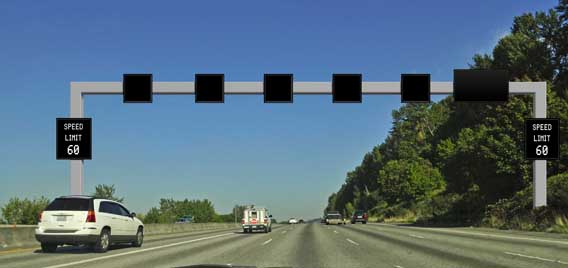
Smarter Highways: What do you think?
Contributed by Sandy Paquette, Roadway Safety Trainer, Evergreen Safety CouncilHere is the sign progression:
Mile 1: When traffic flows freely, the variable speed limit signs are black
Mile 1.5 Seconds after a collision occurs three miles up the highway, the speed limit drops and a sign warns drivers of backups ahead
Mile 2: As vehicles approach the collision area, the speed drops again.
Mile 2.5: A mile from the trouble spot speed limit signs flash arrows intermittently. Green arrows instruct drivers to proceed in their lane, and yellow arrows mean exit the lane as soon as safely possible, because the lane is closed or blocked ahead.
Mile 3: At the site of the collision, red X’s indicate which lanes are blocked.
Friday, August 20, 2010
FMCSA updates CSA 2010 data preview website
TRANSPORTATION SAFETY NEWSFrom the
The Federal Motor Carrier Safety Administration on Monday updated its Comprehensive Safety Analysis 2010 data preview
The website provides motor carriers and enforcement staff with information on their standings in Behavior Analysis and Safety Improvement Categories, which are based on roadside data and investigation findings, according to an FMCSA
The site is part of the agency's efforts to implement a new compliance and enforcement program to better identify high-risk motor carriers, strengthen enforcement efforts and improve safety performance data.
ESC is offering
Developed by our allied partner AdvanceOnline Solutions, along with experts from the DOT Transportation Safety Institute, the courses cover the CSA 2010 Behavior Analysis and Safety Improvement Categories (BASICs).
BASIC 1 - Unsafe Driving
BASIC 2 - Fatigued Driving (Hours-of-Service)
BASIC 3 - Driver Fitness
BASIC 4 - Controlled Substances/Alcohol
BASIC 5 - Crash Indicator
BASIC 6 - Vehicle Maintenance
BASIC 7 - Cargo-Related
Visit our website for information and to register for our
Tuesday, August 3, 2010
Driving Tips for Summer Trips
More fatalities occur on Canadian roads during the summer months than at any other time of year, including the winter holiday season. Alcohol, fatigue and aggressive driving are often implicated in these tragedies. Whether you’re out for a day trip, travelling to the cottage or on a cross-country holiday, the Canada Safety Council urges all Canadians to put safety first when you set out on your summer travels.
Prepare your vehicle
Before leaving on vacation, have your vehicle checked to make sure everything is working properly. Repair or replace worn parts to avoid the worry and time-consuming costly repairs that could ruin your trip. Check fluid levels and tire pressure. Make sure all lights work, including signal lights.
Keep your passengers safe
Make sure everyone in your vehicle is buckled up properly at all times. Buckling up is the single most effective thing you can do to keep yourself and your passengers safe while on the road.
If you are travelling with young children, make sure to make regular stops. Bring plenty of items to keep them occupied. Special travel games and songs also help.
Drive defensively
Drive at a safe speed. Speeding increases the likelihood and severity of a crash. The faster a vehicle is moving, the less time the driver has to react to a hazard, and for other road users to react to that vehicle. A speeding vehicle requires more time and distance to stop. Leave plenty of distance between yourself and the vehicle ahead. Apply the three second rule so you can see around the car ahead and plan a manoeuvre to avoid potential dangers, add more time if you have a heavier vehicle, and in poor weather conditions.
The Canada Safety Council estimates that 85 per cent of collisions are preventable. But simply being in the right will not save you from injury or death. You must be prepared for the unsafe actions of other motorists or for poor driving conditions.
- Obey all signs and signals, including speed limits, traffic lights, stop signs and railway crossings.
- If you drive with a wireless phone, avoid unnecessary calls and always make the driving task your top priority.
- Absolutely never drink and drive.
Stay alert
Canadians often travel long distances when they go on vacation. This creates a temptation to keep driving for extended periods even when tired. On top of this, routes can be quite monotonous, another factor that can make a driver sleepy. Get a good sleep before leaving on a long trip. Fatigue is a form of impairment; so don't give in to that temptation to push on. If you started early, stop early. Rest stops are important. A break keeps the driver alert by promoting blood circulation, makes the trip more pleasant for passengers and lets the vehicle cool down.
Carrying a heavy load or towing a trailer
Before you tow a trailer or haul a load, make sure your vehicle is properly equipped for the job. Check your owner's manual or if in doubt contact your vehicle dealer. Check that your rear view mirrors give a clear view of the road behind. Driving a heavily loaded car or towing a trailer means you need more space to stop or pass. Leave plenty of distance between yourself and the vehicle ahead. Keep your distance - at least three seconds for each six metres (20 ft.) of vehicle length. For conditions that are less than ideal, increase the following distance. If cars cut in front of you, drop back to keep your separation. When traveling slower than the flow of traffic, be courteous. Pull over where possible to let faster vehicles pass.
Share the road
With the warmer weather, comes the prevalence of vulnerable roads users. Motorists must be cautious of cyclists, motorcyclists and pedestrians. Always be on the lookout for and yield to vulnerable road users, even if they don't have the right-of-way. Summer also brings increased construction on our roads and highways. Be prepared to stop or slow down in construction zones.
Drive safely and have a happy travelling season!