Showing posts with label winter safety. Show all posts

Thursday, February 16, 2017

Be Prepared for Winter Driving


Driving in the winter can be nerve wracking whether you are driving in the coastal rains or in snow and icy conditions. Getting prepared before a trip, or even day-to-day driving, can make all the difference in winter driving. It’s a good idea to review these things periodically even if you made an initial pass at the beginning of the winter

Tips to Winterize Your Car:

  • Install winter wipers.
  • Flush the cooling system and replace the coolant.
  • Check your battery.
  • Mount winter tires.
  • Keep (non-freezing) washer fluid full.
  • Pack a winter safety kit.
  • Service your vehicle regularly (including tune up, battery check, and cooling systems).
  • Maintain proper tire pressure.
  • Keep the gas tank as full as possible.
  • Clean all debris from your vehicle.
  • Keep your rear-window defroster in working order.

Being Prepared—Accidents, pass closures, and other winter events can mean unexpected time in your car.  One of the most important items from the above list is making sure you have a winter safety kit.

Items for this emergency winter weather kit should include:

  • Flashlight with extra batteries,
  • Blanket/sleeping bag and warm clothing including: gloves/mittens, socks & hats, and boots,
  • Nonperishable, high-energy foods,
  • Water,
  • First Aid Kit,
  • Cell phone charger/battery booster,
  • Tire chains and tool kit,
  • Ice scraper/snowbrush,
  • Small shovel,
  • Cat litter/sand/salt to help with traction,
  • Jumper Cables,
  • Flares/Warning Triangle, and
  • Whistle to signal for help.

When planning your trip and before leaving, check the weather.  Watch weather reports prior to long-distance trips or before driving in isolated areas.  Delay trips when especially bad weather is expected.  If you must leave, let others know your route, destination and expected time of arrival.

A Few Winter Driving Tips:

  • Avoid driving when you are tired. 
  • Always keep at least ½ tank of fuel in the vehicle.
  • If you start your vehicle to warm it up – do it outside – avoid carbon monoxide poisoning.
  • Accelerate and decelerate slowly – reduce your speed overall.
  • Do not use cruise control in wintery conditions.
  • Increase following distance to 8 to 10 seconds.
  • Look and steer in the direction you want to go.
  • Avoid using your parking brake to slow or stop.
  • If possible, don’t stop when going uphill.
  • Be extra careful at intersections – cars may have difficulty stopping and vision may be impaired.
  • Be extra alert for pedestrians.
  • Share the road with snow removal equipment/crews.

If you do get stranded in an unfamiliar area, do not leave your car. Light flares in front and behind the car and make sure the exhaust pipe is not blocked by snow, mud or any object.

Be  Prepared and Be Safe This Winter.


Contributed by Tom Odegaard, President/Executive Director Evergreen Safety Council


Friday, February 10, 2012

Weather - Be Prepared For the Worst


Contributed by Kat Spitz, First Aid / CPR Instructor, Evergreen Safety Council

Yesterday, I was thrilled to see a dogwood beginning to blossom.  With spring rapidly approaching, “weekend warriors” will be out in full force walking, hiking, skiing and snowshoeing, along with many other outdoor activities.  But as plenty of people who love the mountains know, the weather can start out nice and change very, very quickly!


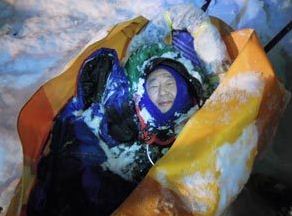
In mid-January, Yong Chun Kim, an experienced snowshoer and guide, became separated from his group on a hike above Paradise at Mount Rainier National Park.  He survived two nights in blizzard conditionswith only what he had packed for a day hike.
Yong Chun Kim handed his camera to rescuers, 
who snapped this photo of him as he was being carried 
after his rescue from Mt Rainier National Park

But people aren’t always so lucky.  Around that same time, four other people were also missing from Rainier.  They were presumed to be prepared enough to hunker down and wait for the bad weather to pass.  After four days, the conditions were still too difficult for even an elite team of mountaineers and the search was suspended.  It is assumed at this time that the missing climbers/hikers were probably getting low on supplies.

As of January 31, 2012, the four had still not been found and the search hadbeen “scaled back”.  It may be spring before we know their fate.


Even if you are just going for a day hike, it is imperative that you are prepared.  Bring food, water, fire starters, communication devices and warm clothes.  Make sure that someone knows when you leave, exactly where you plan to go, and when you plan to return.  The more detail you can provide about your plans before you go, the better the chances that you will be found if the worst happens.

Tuesday, January 17, 2012

Driving in the Snow

Contributed by Ross Bentley
Winter is upon us, so it’s time to take a look at driving in that white stuff - snow.

Before you drive off after a snowfall, take a few minutes to make sure you can see, and that you can be seen by others. Not only is this common sense, it's the law. You can be fined for driving with the windows covered in snow or ice.

Clear all the snow off the hood, windows, trunk and all lights. You don't want snow flying off the hood and back onto the windshield, blinding you. Of course, de-fog the windows before driving, and always drive with your headlights on.

Obviously, the lack of traction is the biggest challenge in snowy driving conditions. If you drive a rear-wheel-drive vehicle, you may be able to help its forward traction a little by adding weight to the trunk. However, if you do get into a rear-wheel skid, the extra weight increases the centrifugal forces once the car begins to slide - just like a pendulum - possibly making matters worse. So, if you put extra weight in the trunk, place it as far forward as possible - preferably right over the rear axle.

And please don't add weight to the rear of a front-wheel-drive car. It not only won't help, it's dangerous.

Getting stuck in deep snow may be one of the most frustrating situations you ever face in the winter. Generally, it's not dangerous, just annoying.

The first objective is to avoid getting stuck in the first place by trying to keep up your momentum. Once you stop in deep snow, your chances of getting going again are reduced. Try to keep the car moving at all times, even if it means just crawling along at a couple of kilometres per hour. In fact, don't carry too much momentum, because your stopping power is much reduced as well.

If you do get stuck, don't just sit there spinning your wheels. All that does is create an icy patch under the tires, which will make it even tougher to get out. Instead, turn off the radio, the heater fan and windshield wipers, open your window and really listen for any spinning of the tires.

Before you even try to get going, though, get out of the car and clear as much snow as possible away from right in front of the tires. If possible, put some sand, kitty litter or even some old carpet (keep this "winter traction kit" in the trunk along with a small shovel, candles, matches, a drinking cup and non-perishable food) down in front of the tires to give them some traction. Give them a chance to get moving - to get some momentum - before having to plow through the deep snow again.

If you still can't get moving, your next objective is to rock the car backwards and forwards until it has enough momentum to get out of the snow rut. In an automatic, quickly but smoothly shift from Drive to Reverse and back again, trying to stay in sequence with the rocking of the car.

In a standard transmission vehicle, gradually start forward then immediately release the clutch, allowing the car to roll back. Then ease the clutch out to move forward again to the front of the rut, then release the clutch and roll back. Do this until the car has the momentum to drive out of the rut.

Use the highest gear possible in an automatic - Drive or Overdrive. In a standard transmission vehicle, try starting in second gear. You may even want to shift up to third and fourth gear earlier than you normally would. Using a higher gear will cause less wheelspin.

Now that you've got your vehicle moving, keep it under control until we look at controlling a car in snowy conditions in a future column.

Now that we've got it going, let's look at keeping it under control in the snow.

First, take it easy when crossing snow-covered intersections. The snow usually becomes packed, polished and very slippery from drivers skidding and sliding at the stop sign or traffic light.

Be very careful when driving in ruts in the snow, as they can pull your car from side to side, or into on-coming traffic. Always look where you want to go, not where you don't want to go. This will automatically make you steer in the direction you want to go, helping control the car's tendency to follow the ruts - which may not be where you want to go.
Also, be careful if your car pops out of the rut, especially if your front wheels are turned. Jumping, or popping, out of a rut with the wheels steered sharply to the left or right usually tends to make the car skid sideways. Again, look and steer where you want to go, turning the steering as little as possible.

If you have to change lanes on a snowy road, be very smooth with your steering and don't accelerate or decelerate. As long as you keep steady - turning the steering wheel as little as possible - driving gently with your speed not too high, you shouldn't have much to worry about when crossing the deep snow and ruts between the lanes.

Often, the tracks, or ruts, made by other vehicles are packed hard and are much icier than the snow next to it. Try to avoid having to brake in these ruts. You will be able to stop much quicker in deep snow, as it will build up in front of the tires, helping stop your car.

Try to do only one thing at a time. Do your braking before a corner in a straight line, then take your foot completely off the brake pedal before you steer around the corner, and don't begin accelerating until you are pointing straight ahead again.
So, whether you're sliding towards a ditch, another car, a telephone pole or whatever, don't look at it. Don't focus on where you could crash. Instead, look and steer where you want to go. That's your best chance of controlling a skidding vehicle.

Before just blindly attacking a snow covered hill, think about whether you can make it up or down safely. Often, that means waiting until the road is clear of other vehicles before attempting it yourself. Too many drivers attack hills while there are other vehicles stuck or spun sideways on it, only to have to stop or slow to let them get out of the way - and getting stuck themselves. It would be much better to wait until the hill is clear, and then drive it all in one shot.

When driving up a hill, or trying to get out of deep snow, try using as high a gear as possible. In an automatic, use Drive or Overdrive. In a standard transmission vehicle, use one gear higher than you normally would - try starting in second and then use third or fourth when climbing a hill.

One last thing. Watch your speed in snowy conditions, especially when coming off a clear major roadway onto a snowy side road. The quick change in conditions can really take you by surprise.

Thursday, October 27, 2011

Before the Snow Flies, Are Your People Ready for the Road?

PREPARING FOR WINTER DRIVING
By Ross Bentley

Winter is approaching, so let’s get ready... let’s get prepared for some of the trickiest driving we ever face.

Perhaps the most important tip I can give about winter driving is: think ahead - be prepared. How many times have you heard someone complain about hitting a patch of black ice and skidding off the road (or almost off the road; or into another car; etc.) on their way to work in the morning? And yet, most of those drivers had to scrape ice off their windows that morning. If they had to scrape ice off the windows, do you think that might have been a good warning there could be ice on the road?

And even if you park in a garage or underground parking lot, think about the road conditions before they take you by surprise. When ever I pull out of my underground parking in the winter, and there might be even the slightest chance of icy or frosty roads, I check it out. Before even getting on the main roads, I'll brake heavily to see if the car skids easily. I figure it's better to know early, than to wait until the first intersection to find out it's so icy I can't stop.

Being prepared also means having your vehicle prepared. Make sure your visibility is unimpeded. How many times have you seen people driving in the winter with snow stacked up on top of the hood and covering the windows, headlights and taillights? It only takes a couple of minutes to clear the snow off; and be sure to defrost the windows.

Waking up to snow.
It's going to be a long commute.
You should also check the condition of your windshield wipers, and make sure you have lots of windshield washer fluid.

Obviously, it's important to have good winter tires on your vehicle. Before buying winter tires, talk to a knowledgeable tire dealer. They can make sure your tires are the correct size, type and properly inflated. In fact, check your tire pressures more often during the winter, as the temperature changes can affect them significantly.

Many people will tell you to add weight to the rear of your car - putting sand bags or whatever in the trunk. That's not bad advice - sometimes. First of all, it doesn't work with a front-wheel-drive vehicle. I don't know how many times I've talked to people driving front-wheel-drives who have put weight in the trunk. Remember, the reason for this is to add weight - and therefore traction - to the driving wheels. That doesn't work when the driving wheels are in front!

If you do have a rear-wheel-drive vehicle, don't put the weight at the very rear of the trunk. If you do, and the car begins to skid, all that weight hanging way out the back will act just like a pendulum, making it even more difficult to control the skid. Instead, if you add weight, place it as far forward in the trunk as possible - preferably directly over the rear axle.

It's a good idea to keep a blanket, extra clothes and boots in your vehicle, in case you do get stuck. Also keep a candle, matches, flashlight and even food - especially if you're planning a long winter trip. And of course, it's smart to carry a shovel, sand and chains in the trunk.

There's nothing like a snowfall to test those rusty winter driving skills! Whether your employees drive for work or simply to and from, help prepare them to make it safely through the winter before the going gets really tough. Call today to schedule a two-hour onsite Safe Winter Driving seminar covering these critical topics:

• following distance and reaction time
• blind spots and tailgaters
• skidding
• winter travel tips
• emergency stops
• bridge decks and entrance ramps
• how to prepare your car for winter

For more traffic safety resources or to schedule a seminar at your location, contact Tina Bacon at 800-521-0778.

Thursday, February 24, 2011

Plan for Weather & Road Conditions

Drivers across the state can plan for weather and road conditions by utilizing Washington State Department of Transportation Web and mobile tools and local media reports.

The National Weather Service reports the significant winter storm that started today with snow should continue through Friday. Drivers can expect freezing temperatures and snow throughout the state and strong winds near the Canadian border.

WSDOT's online tools include:
• Traffic cameras
• Travel alerts
• Mountain passes
• Traffic products for mobile phones and other wireless devices
• WSDOT Twitter feed

Real time traffic information is also available by calling 5-1-1.

Thursday, December 9, 2010

Holiday Shopping Safety Tips

Contributed by Tom Odegaard, Executive Director, Evergreen Safety Council

Just in case you had not noticed, the holiday season has come once again..and here we are once again shopping for Christmas or Hanukkah gifts. The malls and stores are full of people looking for that special gift for those special people in our lives. Don’t let thugs and thieves ruin your celebration. Here are some tips that can help prevent bad things from happening as you go about your shopping adventures.

As you plan your shopping trip, remember there IS safety in numbers. Try to shop with friends or relatives if possible.

What is the number one rule while for safety on the street, in the parking lot and while shopping in stores or a mall?

Be alert!

Be aware of your surroundings and the people around you. The
first thing a thief or a thug looks for is the right opportunity which includes
an unsuspecting victim.

Here are some general safety tips that we hope will help you have a safe and enjoyable shopping experience.

Travelling to/from the mall:
If driving:

  • Be observant. Avoid dark areas, short-cuts, cul-de-sacs.
  • Do not pick up hitchhikers.
  • Keep your doors locked.
  • Do not stop for strangers – if there appears to be an emergency – CALL 9-1-1 from inside your locked vehicle.
  • If signaled to stop by any vehicle other than a clearly marked law enforcement unit, acknowledge the signal, and wave the driver to follow you to a safe location (where there are other people and light). Drive within the speed limit and take the shortest possible route to the nearest safe place. If you have a cellular phone, dial 9-1-1, tell the call-taker you are being followed by an unmarked vehicle attempting to stop you, and ask them to send a marked law enforcement vehicle to your location.
  • Carry an emergency kit in your vehicle

Taking public transportation:

  • Be alert. Do not read while waiting for the bus or train. It shows a criminal you are not paying attention.
  • Make eye contact. Do not appear to be a helpless victim. Carry yourself with confidence, don’t appear not humble and weak.
  • Carry exact change/tokens for the ride. Don’t display large amounts of cash.
  • Look around and pay attention to your gut feelings or instincts. If you feel bad about a situation, you feel right.

Parking lot safety:

  • Park your vehicle in a well-lit area.
  • Keep your vehicle doors locked and your windows shut.
  • Put valuables (and packages) out of sight in your vehicle, preferably in the trunk. If your vehicle doesn't have one, out of plain view (on the floorboard, under a blanket or clothes, etc).
  • Be alert - Know your surroundings. Walk with confidence to and from the mall/store. Keep an eye on the people in front of as well as behind you. Don’t stop to talk with strangers.
  • Carry your purse close to your body. Don't swing it loosely. Don't display large amounts of cash.
  • Approach your vehicle with your keys already in your hand. Be ready to unlock the door and enter as quickly as possible. While approaching your vehicle, scan the area, glance underneath the vehicle, and take a quick look inside before entering.
  • Try not to carry too many packages at one time-make periodic trips to your vehicle.
  • Stay alert while loading items into or out of the vehicle or arranging cargo stowage. If someone approaches, and you feel threatened, get in and lock up until they leave the area; if they loiter, drive away and contact security or the police.
  • Ask for an escort to your car if you feel nervous.

ATM safety:
Remember: Using debit or credit cards is much safer than carrying a lot of cash.

  • However, if the vendors you will visit don't take cards, consider obtaining traveler's checks which, unlike cash, can be replaced if lost or stolen.
  • Visit ATM's only at well-lighted and populated locations; visit during daylight hours if possible.
  • Using the drive-up is usually safer than walking up or into a banking facility. Remember to scan around you as you make your withdrawal. Many ATMs now have "fisheye" mirrors mounted above the keyboard to enable you to view the entire surrounding area while conducting business; try to patronize ATMs so-equipped, and use the mirror!
  • Be alert! If anyone is loitering, or you don't like their looks, go to another ATM. Stand such that those behind you cannot see your PIN as you enter it; your PIN should NEVER be written down on or carried with your ATM card

In store/mall safety tips:
As you shop, be alert in crowded places. Be aware of your surroundings; scan the area from time to time. Avoid concentrating so hard on shopping that you fail to keep track of your surroundings, others near you, or your personal property.

  • Among pickpockets' favorites are revolving doors, jammed aisles, elevators, and public transportation stops and vehicles, especially at rush hour.
  • Carry the day's most expensive purchases closest to your body, and don't carry so much you lose the ability to react quickly.
  • While shopping do not leave your purse in your cart while you go to pick up items.
  • Do not flash cash and only carry the credit card you will need.
  • Wear conservative, comfortable clothing.

Children & Shopping:

If possible, leave your children with a baby-sitter while you are shopping. For holiday shopping, consider making arrangements with family or friends/neighbors, and take turns baby-sitting.

  • If you take your children with you:
  • Be Alert! Keep a close eye on them while shopping.
  • Teach your children to go to a store clerk or security guard if they ever get separated from you in a store/mall, and be sure they know their first and last name so they can tell someone who they are.
  • It's best to keep children under four (4) in a stroller. Children in shopping carts should be properly belted and seated in the child carrier area at all times —never let your child stand in or push a shopping cart.

With all of these safety tips, all of us at Evergreen Safety Council wish you and yours a safe and very enjoyable shopping experience.

Wednesday, December 1, 2010

Over the river and through the woods

Contributed by Norm Nyhuis, Safety Trainer, Evergreen Safety Council
The words to this old song remind us that some of us need to travel during the winter months. Other postings on this and other blog-spots have provided lists of what you should do to get your car ready for wintertime travel. Most of the items on the following list are familiar, but are worth reviewing:
  • What is the condition of your tires?
  • Do you have “winter tread” type tires, with or without studs?
  • Do you have tire chains? Do they fit your car? And, do you know how to safely install and remove them?
  • Do you have an adequate concentration of anti-freeze coolant in your car’s radiator?

Typical lists continue to ask about the condition of your windshield wipers, windshield washer solution, are your exterior lights all functional, and so forth. While all of these are great ideas and should be checked, are you aware there is one other check that you should make?

To make the decision as to whether you should even make the trip, or not, we highly recommend you check National Oceanographic and Atmospheric Administration’s (NOAA), where you can focus in on a specific city, town or even use a zip code to get the latest conditions and more importantly the latest predictions for the route to, and for your destination. Be prepared, but also be informed, before you start out on that winter trip!

Help Reduce Employee Crashes

Safe habits like buckling up and driving sober and free of distractions are a matter of occupational safety for employees who drive, whether a company vehicle or their own. As employers, you can help save lives on our roadways by providing traffic safety awareness and education programs to your employees. Evergreen has an effective and affordable solution, including general and vehicle-specific driver training, consultation, program development resources and employee materials—and most of them can be customized to fit your specific needs. Before the snow flies again, be sure your employees are prepared!

The best way you can get involved is to offer an onsite defensive driving course for all employees. For more information or to schedule a customized defensive driving program for your employees, contact Stephanie Dyck @ 800-521-0778.

Tuesday, November 2, 2010

Safety & Health Solutions - December Newsletter

Evergreen Safety Council produces a monthly newsletter covering a variety of safety topics. Each month we will provide a link here to the online PDF.

Inside this Issue:
Lead Article – CO: The Silent Killer
People in Safety – Angie Ward, Program Manager, Washington Traffic Safety Commission
Articles -
Driving in the Snow Part 1
Are You Prepared for any Incident?
Don't be in a Hurry to Graduate
Safe Driving around Large Trucks
Is "More Training" the Solution to Human Error? Part 2 of 3

You can also sign up to receive an electronic copy via email or hard copy via the mail. This link will also take you to a full archive with over four years of past issues.

So pour yourself a cup of coffee, sit back and read all about what's going on in the world of safety & health.

Thursday, October 21, 2010

Before the Snow Flies, Are Your People Ready for the Road?

There's nothing like a snowfall to test those rusty winter driving skills! Whether your employees drive for work or simply to and from, help prepare them to make it safely through the winter before the going gets really tough.

Call today to schedule a two-hour onsite EverSafe Winter Driving seminar covering these critical topics:
  • winter travel tips
  • following distance and reaction time
  • blind spots and tailgaters
  • skidding
  • emergency stops
  • bridge decks and entrance ramps
  • how to prepare your car for winter

For more traffic safety resources or to schedule a seminar at your location, contact our office today 1-800-521-0778.

BTW: This picture was taken just outside Monroe, two-years ago. And who says it only rains in Washington?

Thursday, September 2, 2010

Oregon Employers Traffic Safety Conference

Evergreen Safety Council is hosting a 1-Day Traffic Safety Conference.

Tuesday, September 21, 2010

Do you have employees that drive? During work? To and from work? Learn from industry experts on how you can help reduce the #1 cause of workplace fatalities – Crashes! Save your company money and save your employees lives.

Reserve you spot now for this dynamic training event! Register Today!

2010 AGENDA
Welcome & State of the State
Tom Odegaard, Evergreen Safety Council
Moving Together: Traffic & Light Rail
Steve Mills, Operations Life Saver
CSA 2010 Training & Implementation
Frank Zamudio, USDOT
Managing Our Driving Behaviors
Syd Muzzy, Safe Driver Trainer &Consultant
Distracted Driving: Cell Phones & Texting
PIO Gregg Hastings (Officer Jim Pierce), Oregon State Police
How Highway Safety Features Work
Dave White, D&D Safety
Winter Driving Safety Tips
Bob Yates, Evergreen Safety Council

Vendors include ACTS Oregon, CROET, ESC and more...

Costs includes continental breakfast and catered lunch

Location: The facility has been generously donated by NECA/IBEW on Airport Way in Portland, OR

Students can register for any of our courses on-line from our website, by filling out a registration form (pdf), or by calling (800) 521-0778 to request a registration form.

For more information about our Oregon training programs, please visit our website.

Friday, December 18, 2009

Its Safe to Decorate with Plants for the Holidays

Although urban legend may be filled with stories about the horrors of accidentally ingesting holiday plants such as poinsettias and mistletoe, in reality there is little to fear, according to the Alexandria, VA-based American Association of Poison Control Centers.

Poison control centers received 1,174 calls about human ingestion of poinsettias and 227 calls about animal ingestion in 2008. No deaths or major medical outcomes were experienced in any of those cases. Likewise, poison control centers received 132 calls about human ingestion of mistletoe, none of which resulted in a serious outcome.

"Treating a poinsettia exposure is a glass of milk for the child and a tincture of reassurance for the parent," said Dr. Ed Krenzelok, managing director of the Pittsburgh Poison Center.

Although anything ingested in excess can be hazardous, Krenzelok noted, minimal ingestion of poinsettias or mistletoe is unlikely to cause anything more than discomfort.

Thursday, December 10, 2009

carbon monoxide poisoning

With winter around the corner and the use of fire places and generators happen, remember to protect yourself from possible carbon monoxide poisoning.

Carbon monoxide poisoning is a silent, deadly killer claiming about 1,000 lives each year in the United States. Such common items as automotive exhaust, home heating systems and obstructed chimneys can produce the colorless, odorless gas. The gas can also be produced by poorly vented generators, kerosene heaters, gas grills and other items used for cooking and heating when used improperly during the winter months.
  • NEVER run generators indoors. Open a window slightly when using a kerosene heater.
  • NEVER use charcoal to cook indoors.
  • NEVER use a gas oven to heat your home.

Symptoms of carbon monoxide poisoning include sleepiness, headaches and dizziness. If you suspect carbon monoxide poisoning, ventilate the area and get to a hospital.

Tuesday, December 8, 2009

CDC's Holiday Safety Advice

Stay Safe this Holiday Season
During the upcoming holiday season, and all year, keep safety in mind whenever you’re on the road. Tips from CDC’s Injury Center on motor vehicle safety can help you protect yourself, your passengers, and your family and friends. Whether you’re headed around town, out of town, or out to celebrate, we wish you a safe holiday season.


CDC unveils healthy travel campaign
In response to concerns about the spread of the H1N1 influenza, the Centers for Disease Control and Prevention this week launched a public awareness campaign on healthy traveling.
Being in close proximity to others – whether family members or fellow passengers on planes, trains or buses – can cause germs to spread quickly. To stay healthy on the road, CDC recommends:
  • Travel only when you are feeling well.
  • Get vaccinated for both the seasonal influenza and H1N1 if you are in a high-risk group.
  • Wash hands often.
  • Cover coughs and sneezes with a tissue or your sleeve.

Monday, November 23, 2009

Holiday Safety Starts This Week

Turkey Safety
Hi there, well in just a few days it will be Thanksgiving (aka Turkey Day) and we know some of you will be deep frying that bird (which is really tasty when you add some Cajun spices.) But more importantly is that deep frying a turkey is DANGEROUS. The following are some recommendations from the US Consumer Product Safety Commission.
  • Keep fryer in FULL VIEW while burner is on.
  • Place fryer in an open area AWAY from all walls, fences, or other structures.
  • Never use IN, ON, or UNDER a garage, breezeway, carport, porch, or any structure that can catch fire.
  • Raise and lower food SLOWLY to reduce splatter and avoid burns.
  • COVER bare skin when adding or removing food.
  • Check the oil temperature frequently.
  • If oil begins to smoke, immediately turn gas supply OFF.
  • If a fire occurs, immediately call 911. DO NOT attempt to extinguish fire with water.

For safest operation, CPSC recommends that consumers follow these guidelines as they prepare to use a turkey fryer:

  • Make sure there is at least 2 feet of space between the liquid propane tank and fryer burner.
  • Place the liquid propane gas tank and fryer so that any wind blows the heat of the fryer away from the gas tank.
  • Center the pot over the burner on the cooker.
  • Completely thaw (USDA says 24 hours for every 4 to 5 pounds) and dry turkey before cooking. Partially frozen and/or wet turkeys can produce excessive hot oil splatter when added to the oil.
  • Follow the manufacturer's instructions to determine the proper amount of oil to add. If those are not available:

-Place turkey in pot
-Fill with water until the turkey is covered by about 1/2 inch of water
-Remove and dry turkey
-Mark water level. Dump water, dry the pot, and fill with oil to the marked level.

From us at Evergreen, Happy Thanksgiving and stay safe in no matter what you are doing this holiday season.

Fire Safety Tips for the Holiday Season
November 24 – 30, 2009 is Canadian National Home Fire Safety Week and below are some great holiday safety tips, no matter which side of the boarder you live on.

With the fun filled holiday season quickly approaching comes a need to take safety precautions around the home. Whether it is ensuring the Christmas tree is properly watered, to hanging fire-safe ornaments, to not overloading electrical outlets, there are a number of steps Canadians can take to avoid a holiday disaster.

Both the Evergreen Safety Council and Canada Safety Council encourages everyone to take every precaution to ensure the holiday season is one that is safe and happy.

A very important holiday tip that should be followed all year long is to make sure that smoke alarms are working and that there is one on every level of the house. Single level homes and apartments should have smoke alarms near the kitchen and all sleeping areas.
Here are a few simple safety tips to keep your home fire-safe during the holidays:

The Christmas Tree
  • When purchasing a real tree, check for freshness by tapping it on the ground – dropping needles, indicate a dry, highly flammable tree. Needles should be hard to pull from branches and when bent between your fingers, they do not break.
  • When purchasing an artificial tree, make sure it’s ‘fire resistant.’ Although this label does not mean the tree won't catch fire, the tree will resist burning and should extinguish quickly.
  • Place your tree away from fireplaces and radiators. Also, heated rooms dry out fresh trees, so be sure to keep the stand filled with water by topping it up daily.
  • Never use lighted candles on or near the tree.
  • Remove a real tree within 10 to 14 days; otherwise it can start to dry out and pose a fire hazard.

The Fireplace

  • Ensure the chimney flue is open and clean before you light a fire.
  • Remove all decorations that could be burned around the fireplace, such as stockings.
  • Always use a screen in front of the fireplace to protect against flying sparks.
  • Do not burn wrapping papers in the fireplace. A flash fire may result, as wrappings ignite suddenly and burn intensely.
  • Never leave the fire unattended or let it smoulder.
  • Do not use Christmas trees for firewood. Only use seasoned and dried wood.

Decorations

  • Choose decorations that are fire-resistant, non-combustible and non-conductive.
  • Avoid using tinsel together with spray-on snowflakes. This combination is highly combustible.
  • Do not use metallic ornaments on the tree. If they make contact with defective wiring they could become a shock hazard.

Lights

  • Use Canadian Standards Association (CSA) approved lights. Place indoor and outdoor lights in their respective environments.
  • New or old, check light strings for broken or cracked sockets, frayed or bare wires, or loose connections, and throw out damaged sets. Make sure you do this before putting lights up. It is much easier to replace bulbs on the ground, than on the roof.
  • Do not use electric light strings/sets on metallic trees. A faulty system could energize the tree and shock or electrocute anyone coming into contact.
  • Turn off all lights when you go to bed or leave the house. The lights could short out and start a fire.
  • Do not overload electrical outlets, and never string more than three sets of lights per single extension cord.

Candles

  • Never leave burning candles unattended, and always keep out of reach of children.
  • Keep candles in sturdy holders on a stable surface, well away from curtains, trees or any other potentially flammable objects.
  • Put out all candles before leaving the room or going to sleep.

The Kitchen

  • Never leave your cooking unattended.
  • Avoid wearing loose clothing while cooking.
  • Make sure items that can catch fire, such as paper towels, are kept away from the stove.
  • Use a timer to remind you that the stove or oven is on when roasting or baking food.
  • In case of a fire, never turn on the overhead fan – this could spread the fire.
  • If a fire starts and can’t be quickly put out, leave your home and immediately call the fire department from a safe location.

Remember to have a working smoke alarm on each level of your house. Have a safe and happy holiday season!

Wednesday, November 18, 2009

Generator Use Safety

With winter time right around the corner, there is always the chance of loosing power due to a storm. We know that some of you have generators, so here are some tips for you to remember if you loose power and use a generator.
  1. Before installing a generator, be sure to properly disconnect from your utility electrical service. If possible, have your generator installed by a qualified electrician with a transfer switch.
  2. Run generators outside, downwind of structures. NEVER run a generator indoors. Deadly carbon monoxide gas from the generators exhaust can spread throughout enclosed spaces. Install a carbon monoxide detector.
  3. Fuel spilled on a hot generator can cause an explosion. If your generator has a detachable fuel tank remove it before refilling. If this is not possible, shut off the generator and let it cool before refilling.
  4. Do not exceed the rated capacity of your generator. Most of the small, home-use portable generators produce from 350 to 12,000 watts of power. Overloading your generator can damage it, the appliances connected to it, and may cause a fire. Follow the manufacturer’s instructions.
  5. Keep children away from generators at all times.

Do you have experience using a genereator during the winter months? What tips would you add to this list?

Monday, November 16, 2009

Don’t be Blown Away by Windstorms

Windstorm season is officially here, and already Seattle has seen its share of power outages, rain and high speed winds. Meteorologists are predicting the first major storm of the year to hit Monday morning. Below are six tips for staying safe during a storm, curtsey of King County Fire District #2 in Burien.

  • Stay inside and away from windows.
  • Listen to your local news for emergency advice.
  • If your heating system stops working, use a safe alternative (do NOT use a gas oven, gas range, barbecue, hibachi, or propane heater for indoor heating).
  • If traffic lights are out, treat the intersection as a 4-way stop.
  • Minimize driving to conserve fuel. Gas station pumps do not work during power outages. It is best to keep a full tank of gas in your car when you know a storm is coming.
  • Do not attempt to move downed power lines.

Before a storm hits, take the time to cut diseased and damaged branches from trees around your house. If trees or other vegetation are overgrowing utility lines, do NOT attempt to clear them from around the lines yourself. Call your local utility company. Be sure to secure objects on your property that could be blown away, including your garbage and recycle containers, which might fall over and spread debris.

It is never a bad idea to put together a basic emergency kit as well. Make sure to include:

  • Flashlights, extra batteries and matches.
  • Battery-powered radio and wind-up clock.
  • Canned or dried non-perishable foods and a manual can opener.
  • A safe alternate source of heat plus extra fuel (wood, kerosene).
  • Extra blankets and warm clothes.
  • Bottled drinking water.

Finally, always keep a list of emergency phone numbers handy. Establish an out of area contact that all family members can reach in an emergency, should you get separated. If you lose power or see a utility pole or power line that has fallen or been damaged, call the numbers listed below.

Seattle City Light: 206-684-3000 (7:30 am – 6 pm) or 206-706-0051 (after hours)
Puget Sound Energy: 1-888-225-5773 (24 hours)